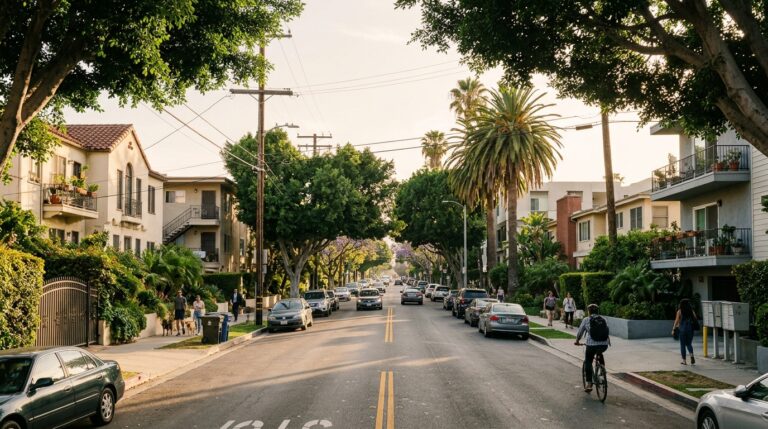
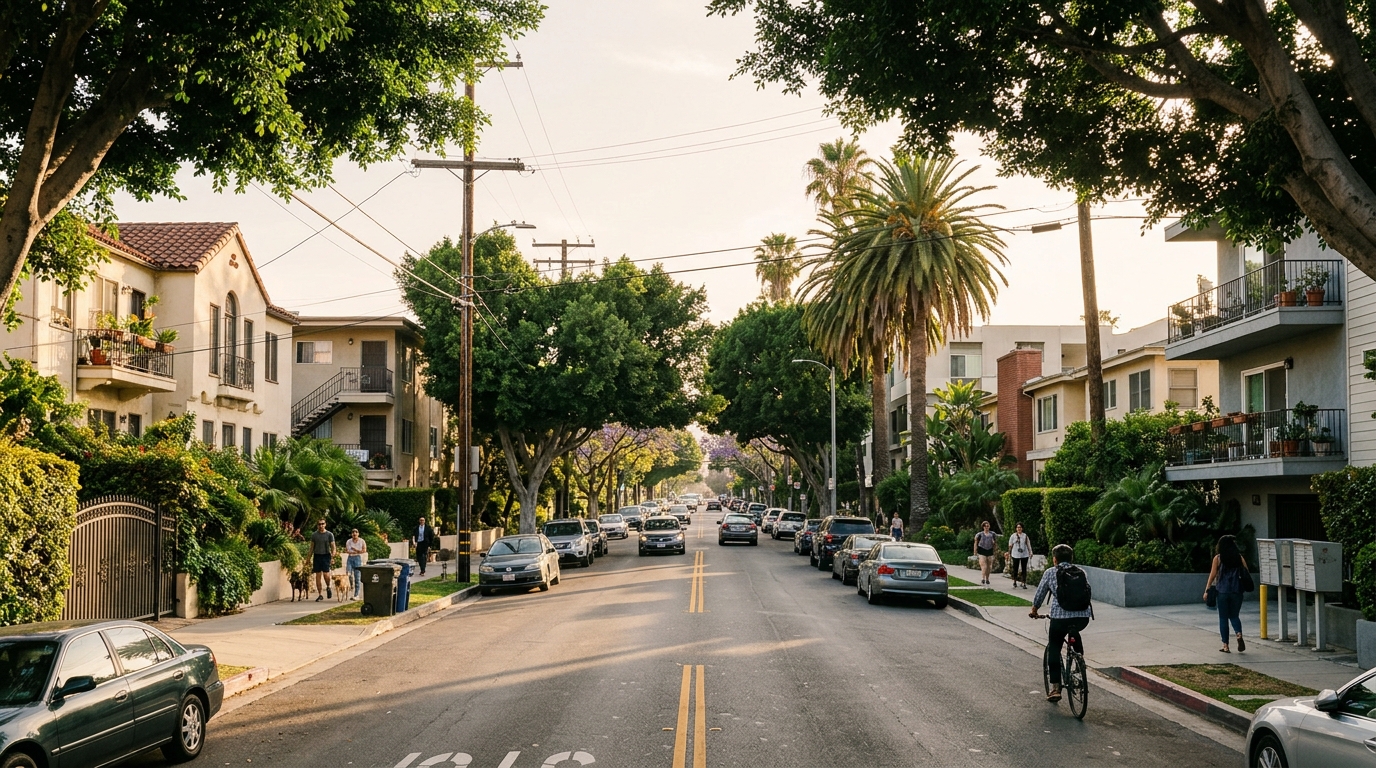
Fountain Avenue bike lanes are moving forward after a closely watched West Hollywood City Council vote on October 19, 2026. Councilmembers rejected a proposal to revisit the design without protected bicycle lanes. The decision keeps the city’s approved safety-focused streetscape plan in place, although an approved plan is not the same thing as completed construction.
For people who live along Fountain, commute through the corridor, or travel between the city’s east and west sides, the project raises practical questions. What will happen to the road’s existing lanes? Where will cars park? Will sidewalks become easier to use? And when can residents expect to see changes on the ground?
Those questions matter because Fountain is more than a shortcut. It is a residential street carrying local traffic, deliveries, cyclists, pedestrians, and people traveling to work or appointments. The redesign seeks to make those uses coexist more safely, but changing how limited street space is allocated inevitably affects different users in different ways.
Here is a fact-based guide to the adopted design, the October vote, the two phases of work, and what residents can do while implementation details continue to evolve.
What West Hollywood Has Approved for Fountain Avenue
The City of West Hollywood’s Fountain Avenue project page describes a two-phase streetscape initiative. Phase 1 is intended to deliver near-term safety and mobility changes. Phase 2 is a more extensive future reconstruction, including sidewalk and accessibility improvements that require additional design and funding work.
The City Council approved the Phase 1 layout on September 15, 2025. A later attempt to redirect that layout failed in October 2026. The important distinction is that the safety plan survived a political challenge; it does not mean every curb, crossing, and lane has already been installed.
What happened at the October 19 council meeting?
On October 19, 2026, Councilmember Lauren Meister introduced an alternative approach that would have preserved more existing parking and left protected bikeways out of a revised plan. The alternative still contemplated traffic calming and redesigned crossings, so the debate was not simply about whether Fountain needed improvements. It was about which improvements would receive space and priority.
That motion failed 3–2, according to contemporaneous reporting by Beverly Press. The existing protected-bike-lane approach therefore remains the direction of the project. Residents should distinguish the council’s decision from later questions about construction timing, street-by-street notices, and temporary access during the work.
Phase 1: protected lanes, crossings, and a new layout
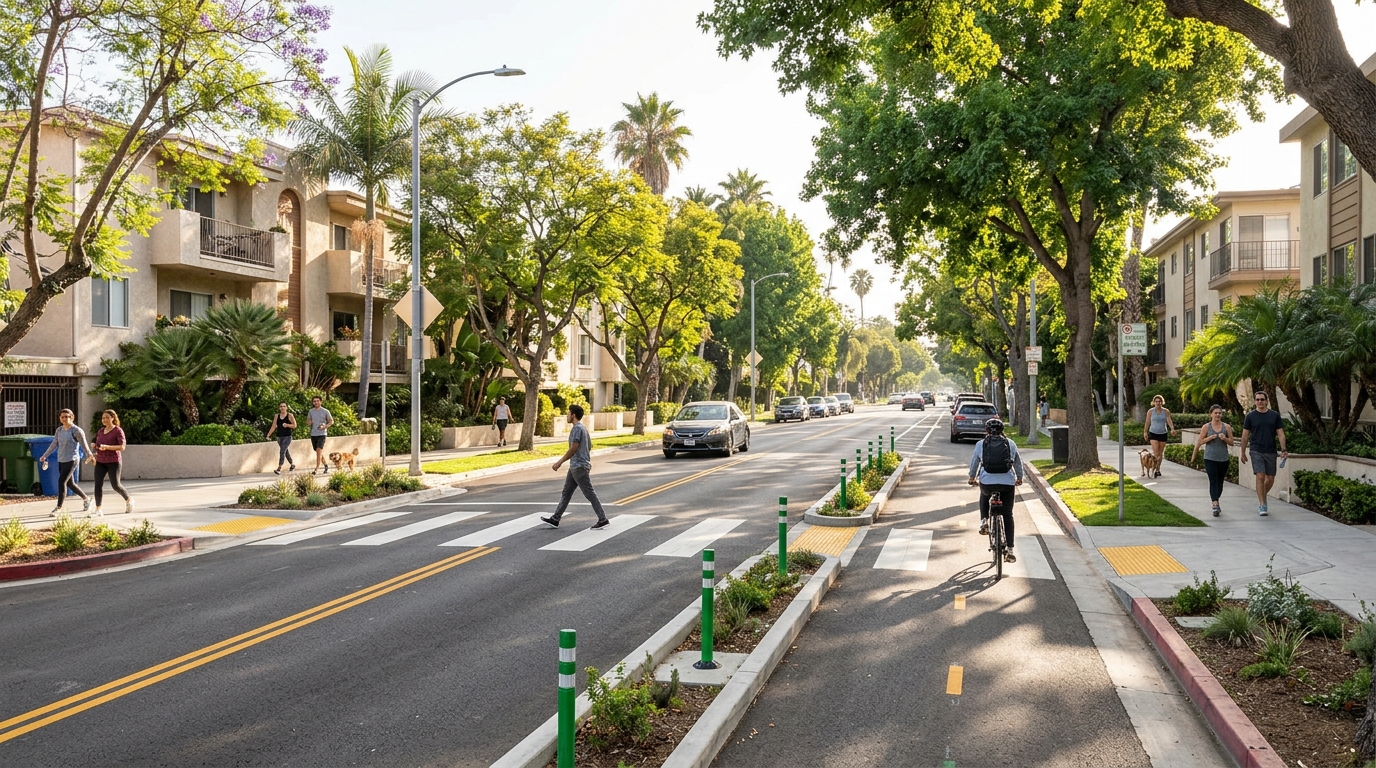
Under the city’s published Phase 1 concept, Fountain Avenue would have one vehicle travel lane in each direction and a protected bicycle lane separated from moving traffic by concrete curbs. The package also includes more visible crosswalks, painted curb extensions on side streets, repaving, selected planters, and bicycle counters.
These are connected changes. A protected bikeway is easier to understand when it is paired with intersections that clearly show where motorists, cyclists, and people crossing on foot should travel. Repaving and restriping also give the city a chance to make the design legible rather than relying on a patchwork of older markings.
Why parking is still part of the conversation
The redesign would change how much curbside parking is available, with the city describing parking along the south side in its Phase 1 plan. For a household without off-street parking, a space lost nearby may mean a longer walk, more time looking for a legal place to leave a car, or greater concern about loading and deliveries.
Supporters of separated bicycle lanes view those trade-offs differently. They argue that the street should serve people who cannot or prefer not to drive, including residents making short trips on two wheels. Both perspectives are relevant when evaluating a corridor used by renters, drivers, visitors, service vehicles, and people with mobility needs.
The most useful next step is to examine actual block-level parking and loading arrangements rather than assume every address will experience the same change. Current posted restrictions and city construction notices should remain the immediate guide.
How Phase 1 and Phase 2 are different
Phase 1 is a near-term street reconfiguration. Phase 2 is described by the city as a longer-term reconstruction effort that may widen sidewalks where feasible, improve signals, add landscaping, relocate utilities, and update curb ramps to accessibility standards. Those bigger improvements involve more complex engineering and cannot be treated as automatic results of the first phase.
That separation matters for expectations. A painted curb extension or newly protected lane can arrive before a permanent sidewalk rebuild. Likewise, a safer crossing design in Phase 1 does not mean that every accessibility issue on Fountain will be resolved immediately.
Phase 2: accessibility, sidewalks, and landscaping
For many people, the strongest long-term promise may be a better walking environment. Narrow or obstructed sidewalks are especially difficult for wheelchair users, parents with strollers, and pedestrians navigating past utility poles or driveway crossings. Phase 2 aims to address conditions like these through a broader redesign.
However, the city still needs to develop and fund elements of this permanent transformation. A preliminary vision should not be reported as a finished construction schedule. The best place to follow the difference is the city’s project materials rather than a social-media rendering without context.
How the Fountain Avenue Changes May Affect Daily Life
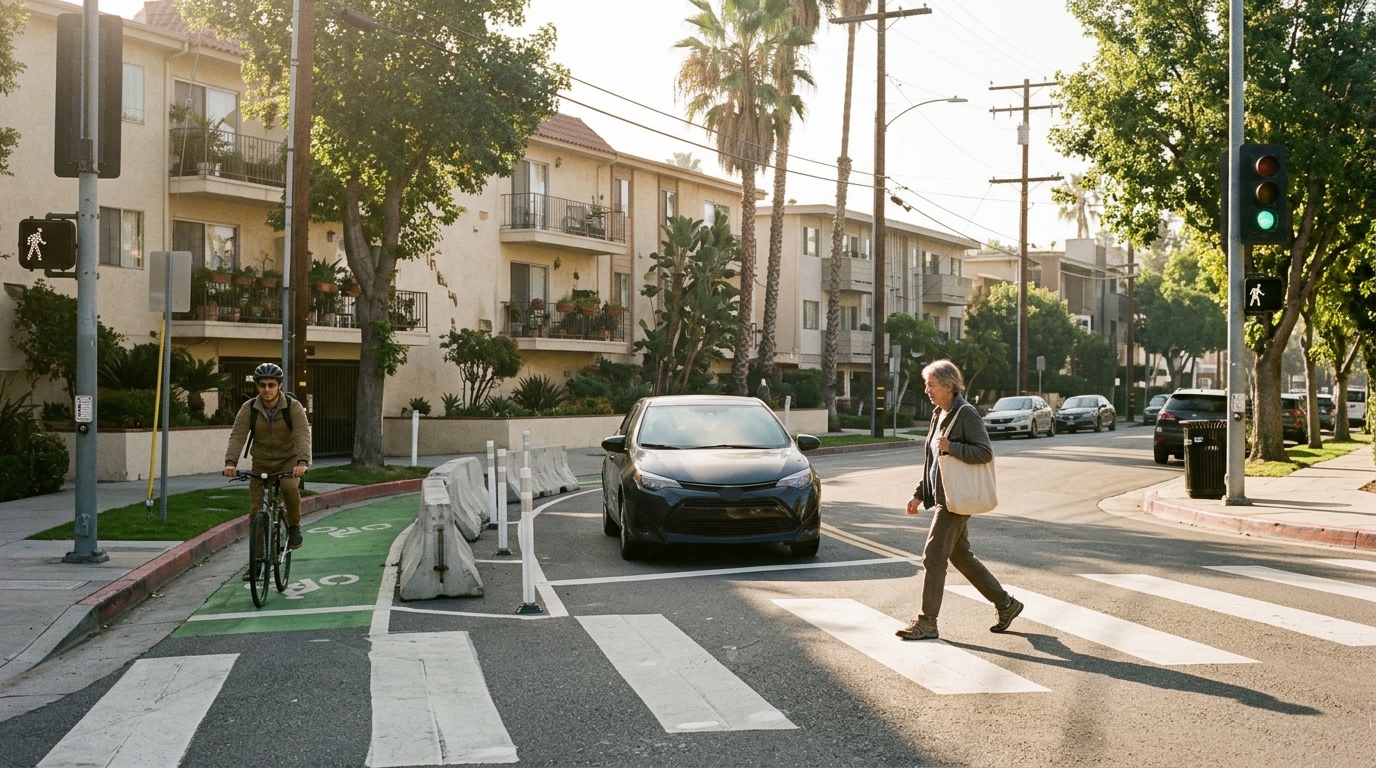
A major street redesign succeeds or fails through ordinary experiences: how people cross at dusk, how drivers turn, where deliveries happen, whether a bicycle route feels protected, and how people with disabilities reach their destinations. Those details may be less dramatic than a council vote, but they are the questions residents will encounter most often.
What drivers, cyclists, and pedestrians should expect
Drivers should anticipate a roadway with fewer general-purpose lanes than the prior configuration and pay particular attention to updated signs, turning rules, and crosswalk markings once work is installed. Changes to lane geometry can feel unfamiliar even to longtime residents. The safest approach is to follow posted controls rather than drive from memory.
Cyclists may gain a more predictable route through northern West Hollywood if the concrete-separated facilities are built as planned. Even protected lanes require caution at intersections, garages, and driveways. A physical separator reduces some conflict points; it does not eliminate the need to watch for turning vehicles or people crossing the bikeway.
Pedestrians may benefit from higher-visibility crossing treatments and calmer traffic patterns. Still, construction itself can temporarily affect sidewalks and access. Businesses and residents should monitor notices for temporary closures and alternative routes, especially when traveling with a stroller or mobility aid.
Four ways to prepare before work begins
First, bookmark the official Fountain project updates and look for construction notices near your block. Second, check whether your household, guests, or caregivers rely on street parking and identify legal alternatives before restrictions change. Third, ask about delivery or accessible passenger-loading arrangements if those services are essential. Fourth, allow more travel time when crews are resurfacing or restriping streets.
If you ride a shared e-bike or scooter, remember that those services have their own parking requirements. Our guide to West Hollywood’s 2026 e-bike and e-scooter rules explains why an approved riding route does not automatically mean you may end a rental trip anywhere along it.
Fountain is also part of a larger city experience. Visitors spending time on the Sunset Strip or exploring the historic Route 66 corridor may want to consider walking, transit, and local route changes rather than assuming a familiar driving shortcut will always be fastest.
The date of construction deserves particular care. The city’s project page has cited an anticipated fall 2026 start, while the West Hollywood Bicycle Coalition has more recently described a spring 2027 installation following winter weather. Those timelines may be updated again. Treat the city notices issued closest to actual work as the controlling source.
Residents can also make project feedback more useful by focusing on specific locations. A message describing a blocked curb ramp, a dangerous turning movement, or a missing loading option is easier to evaluate than a general statement that the entire project is good or bad. Describe the cross street, time of day, and the users affected.
For West Hollywood, the Fountain Avenue bike lanes debate captures a broader urban question: how should a city divide a narrow public street among people with different travel needs? The October 2026 vote kept the approved approach alive, but the practical test will come during installation and daily use. Following official updates, understanding both phases, and planning for block-by-block impacts will help residents navigate that transition with fewer surprises.