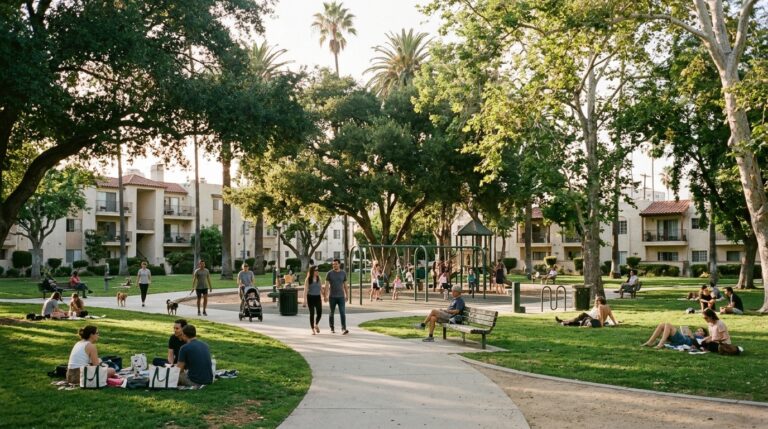
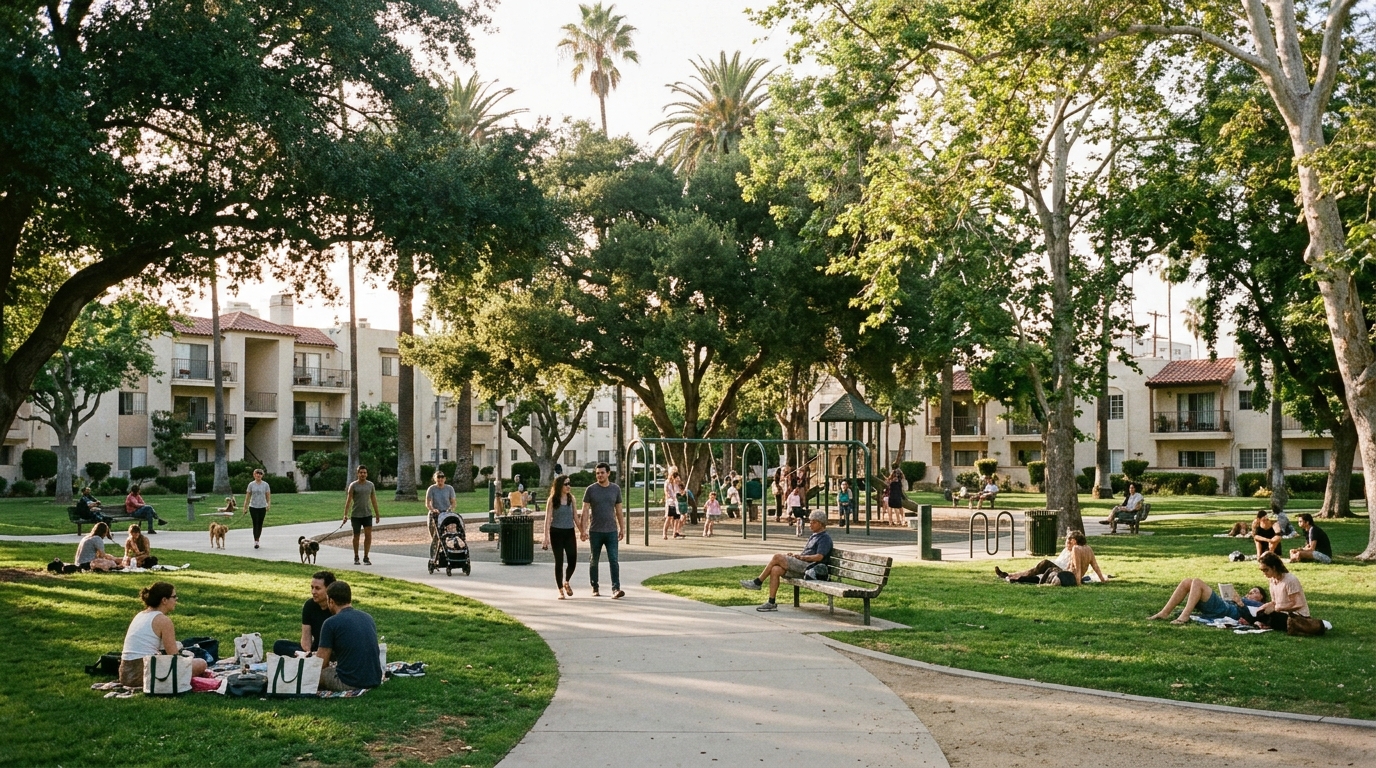
Rather than announcing one fully approved redesign, the City is gathering information about how people currently use the park and what improvements they would value.
The process is especially important because Plummer Park serves different groups, including families, older adults, dog owners, sports enthusiasts, and organizations hosting cultural activities.
As of October 2026, the planning initiative is in the early stages of Phase 2. Here is what residents should know about its goals, recent changes, and opportunities to participate.
Plummer Park Improvement Plan: What Is the City Planning?
Plummer Park is located at 7377 Santa Monica Boulevard in West Hollywood. Its established trees, lawns, recreational facilities, and community buildings have made it a familiar neighborhood destination.
However, changing recreation needs and long-term maintenance challenges have encouraged the City to revisit earlier improvement concepts.
The updated plan is intended to balance new facilities with existing park character.
Why West Hollywood Is Updating Its Park Plans
West Hollywood previously developed park master plans in 1994 and 2004. Those plans included proposed changes that are no longer considered feasible.
In February 2025, the City Council formally revoked both earlier master plans.
Consequently, the current project is not simply an effort to implement an old construction blueprint.
Moving Beyond the 1994 and 2004 Master Plans
The new planning process starts with updated information about the neighborhood and park users.
It examines which facilities remain useful, where maintenance or accessibility challenges exist, and how the park might respond to changing community priorities.
The City also wants to consider climate resilience, sustainability, and preservation of cultural resources.
These subjects matter because parks are long-term public investments. A design selected today may need to function for many years.
For example, mature trees can provide shade, yet their health and roots require appropriate maintenance.
Likewise, additional recreational facilities may create benefits but also demand ongoing staffing, repairs, and cleaning.
The updated plan must consider these operating responsibilities rather than focusing only on attractive drawings.
Importantly, revoking the earlier master plans does not mean the City intends to remove every existing facility.
Future changes remain subject to community input and later decisions.
Recreation, Accessibility, and Historic Preservation
The planning process looks at the park as a combination of outdoor and indoor community spaces.
Visitors use Plummer Park for informal walks, organized activities, sports, and neighborhood events.
The site also contains buildings associated with West Hollywood’s civic and cultural history.
Therefore, future recommendations need to address how recreational programming fits alongside historic preservation.
Accessibility is another important consideration. Pathways, entrances, seating, restrooms, and recreation facilities should support visitors with different mobility needs.
However, the current plan does not guarantee that every suggested accessibility improvement will be completed immediately.
The City must evaluate feasibility, costs, and project priorities.
Residents with firsthand experience navigating the park may offer especially useful information about obstacles and difficult routes.
Clear descriptions of those issues can help planners understand daily conditions.
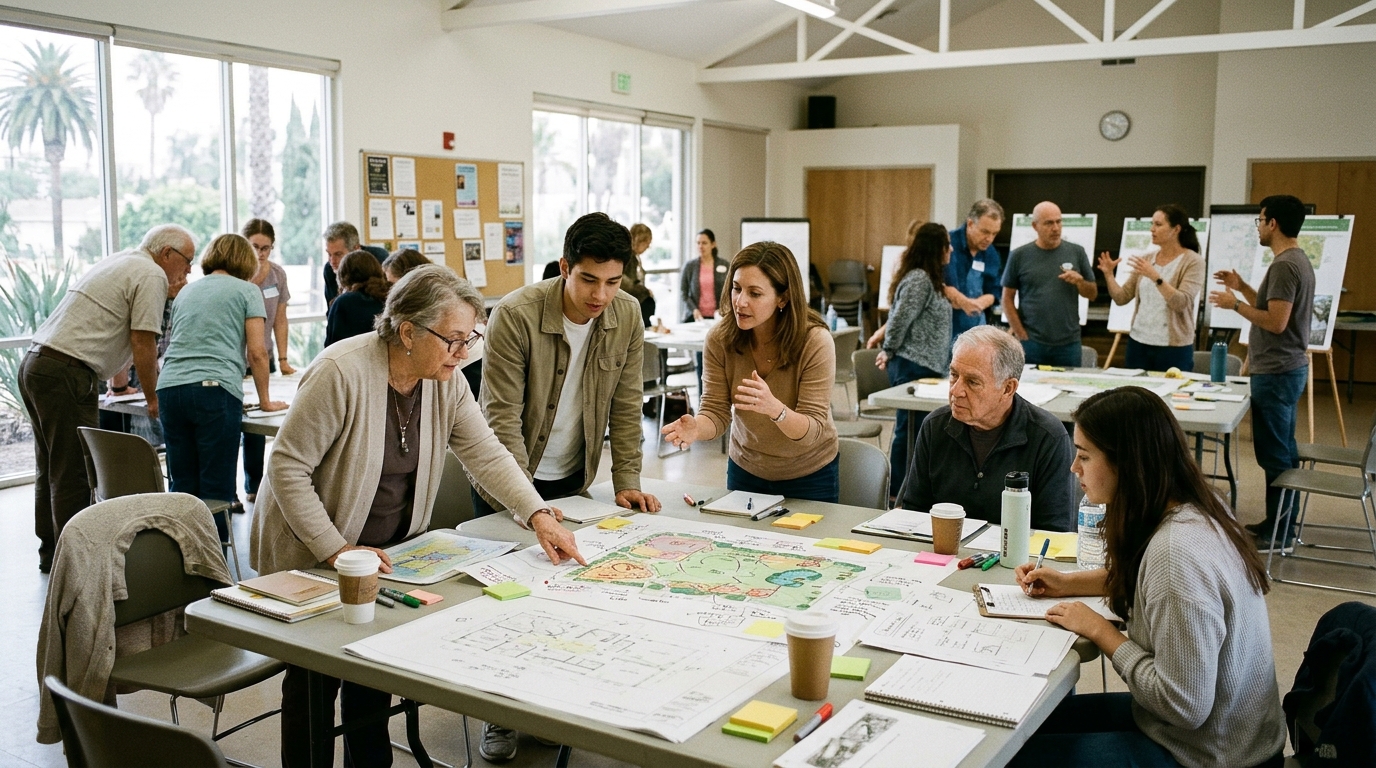
How the Community Engagement Process Works
The City organized the Comprehensive Improvement Plan around two broad phases.
Phase 1 focused on reviewing park uses and collecting community feedback.
Phase 2 will involve further engagement and development of a more detailed improvement plan.
What Happened During Phase 1?
Beginning in 2025, West Hollywood organized brainstorming activities, pop-up events, community discussions, and walking tours.
These activities addressed sports, recreation, culture, history, environmental concerns, and educational programming.
For example, events in August 2025 explored how different groups experience the park’s facilities.
Additional meetings provided updates to City commissions and advisory boards.
The City’s Engage WeHo platform now includes a 2026 final summary report and park needs assessment.
These documents help establish a foundation for later recommendations.
Nevertheless, public participation is not equivalent to a formal vote approving a specific facility.
Ideas raised during engagement must still be evaluated through the planning and approval process.
Residents can consult the official Plummer Park engagement page for documents and updates.
What Will Happen During Phase 2?
According to the City, the project is now in the early stages of Phase 2.
This stage builds on the first round of feedback and considers possible improvements in greater detail.
Working group sessions are intended to help participants discuss options and understand planning constraints.
For instance, a proposed sports facility may require examination of available space, noise, scheduling, and other park uses.
Similarly, landscaping improvements may depend on irrigation conditions and preserving healthy trees.
The aim is to develop a community-supported plan that can guide future investment.
However, a comprehensive plan should not be confused with an approved construction contract.
Even after the City selects priorities, individual projects may require design, funding, approvals, and implementation schedules.
Residents should watch for updated working group dates rather than assuming earlier workshops remain open.
What Residents Can Expect From Plummer Park’s Next Chapter
While the long-term improvement plan is still developing, Plummer Park continues to serve visitors through existing facilities and programs.
Some separate improvement projects are also taking place independently of the broader planning effort.
Understanding that distinction prevents confusion between completed amenities and concepts under review.
Dog Park, Sports Facilities, and Community Participation
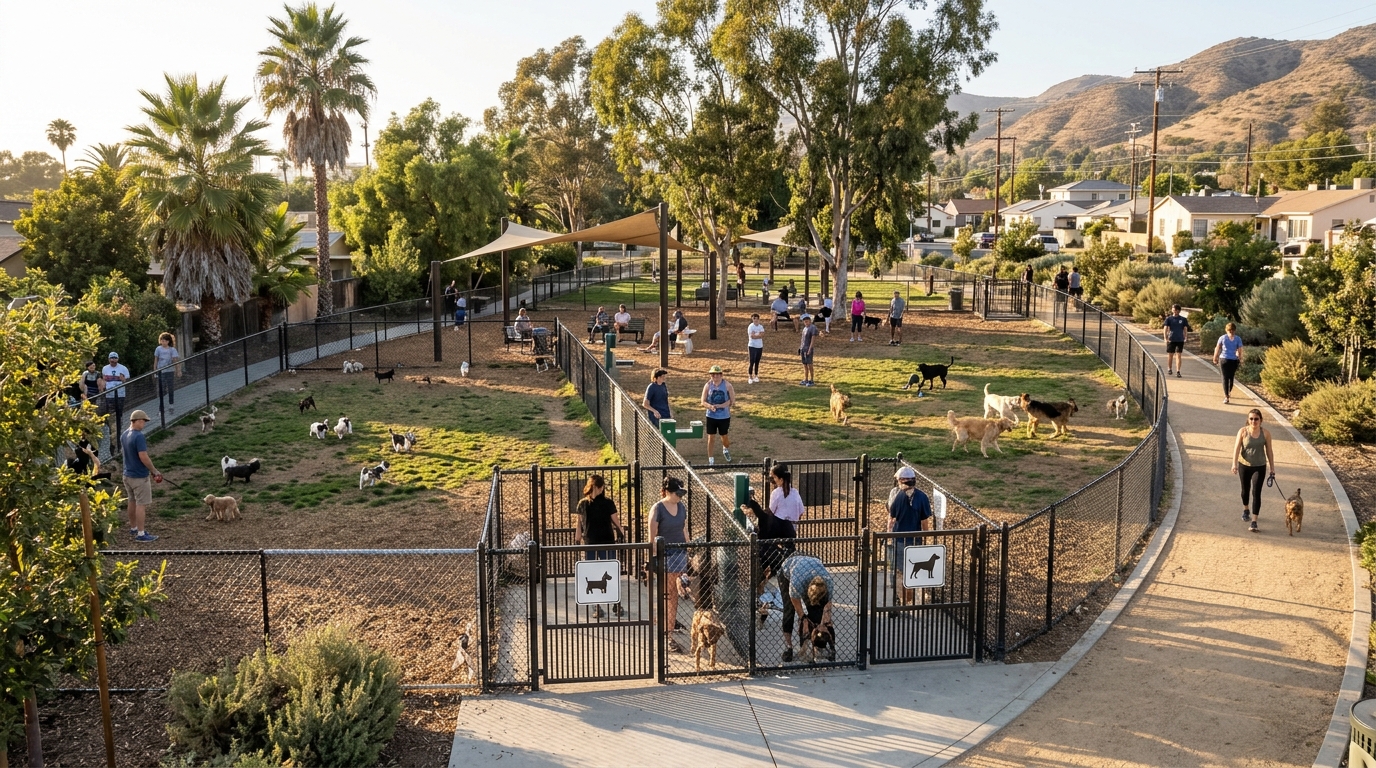
West Hollywood announced a soft opening for the new Plummer Park dog park beginning October 9, 2026.
The fully enclosed facility includes separate areas for small and large dogs.
This is an actual recent park improvement, not merely a feature being discussed in a future master plan.
What should dog owners know?
Before visiting, review current park rules and posted dog park instructions.
Owners should supervise their pets and use the appropriate designated area.
Even in a fully fenced space, dogs may behave differently around unfamiliar animals.
Follow applicable vaccination, licensing, and leash requirements when entering or leaving the enclosure.
Furthermore, give other owners space to manage their dogs safely.
The broader improvement plan may consider other recreation needs, but it should not be presented as automatically replacing this new dog park.
What about tennis, pickleball, and other activities?
Existing recreation facilities are among the topics addressed during park planning discussions.
At a March 2026 subcommittee meeting, officials reviewed tennis and pickleball courts alongside other park services.
However, the meeting agenda alone does not confirm a specific number of new courts or a construction deadline.
Players should continue using the City’s official facility information for current reservations and operating rules.
Proposals involving court changes may require consideration of demand, neighboring uses, noise, and maintenance.
The final recommendations will depend on the ongoing planning process.
How the park supports culture and community life
Plummer Park is also a location for cultural programming and public gatherings.
For example, the City’s Summer Sounds concerts have brought live music into the park.
Our West Hollywood Summer Sounds 2026 guide describes one recent performance at the venue.
Such events demonstrate why flexible gathering areas matter alongside sports and everyday recreation.
Nevertheless, future cultural programming and facility availability depend on official scheduling decisions.
Residents should consult event calendars before assuming a particular concert or activity will return.
Why climate resilience matters for an urban park
Southern California parks experience summer heat, drought concerns, and periods of intense rain.
Shade trees, suitable planting, irrigation management, and durable surfaces can influence how comfortable public areas remain.
However, improvements must be designed around the park’s actual conditions.
Preserving healthy mature trees can be valuable because large canopies are difficult to replace quickly.
At the same time, some trees may require professional assessment or maintenance.
A well-developed plan can help the City compare these needs with available funding.
How to participate in future decisions
Visit the City’s official project overview.
The webpage links to the Engage WeHo project, where residents can follow upcoming sessions and subscribe to project updates.
Useful feedback may describe a specific location, current difficulty, and practical improvement.
For example, a visitor could identify a route that becomes uncomfortable during hot weather or an entrance that is difficult to navigate.
Detailed observations are often more useful than a broad request for the park to become better.
Frequently asked questions
Has the Plummer Park redesign been approved?
No final comprehensive redesign has been announced. The City is working through a community-led planning process.
What stage is the project in?
The Engage WeHo project page identifies the early stages of Phase 2 as of October 2026.
Are the old master plans still in force?
No. The City Council revoked the 1994 and 2004 master plans in February 2025.
Is there a new dog park?
Yes. The City announced its soft opening beginning October 9, 2026.
Where can residents follow new meetings?
Use the official Engage WeHo Plummer Park project page.
Final thoughts
The Plummer Park Improvement Plan offers West Hollywood a chance to make long-term decisions about a valued community destination.
Recreation, historic preservation, accessibility, and climate resilience are important parts of that conversation.
However, the process remains underway. Residents should distinguish existing facilities and completed projects from future proposals.
By participating in upcoming discussions, community members can help shape a park that remains useful for different generations.
Editor’s note: Information reflects City of West Hollywood sources available October 27, 2026. Project proposals and participation schedules may change.